Episode Transcript
[00:00:00] Speaker A: Foreign.
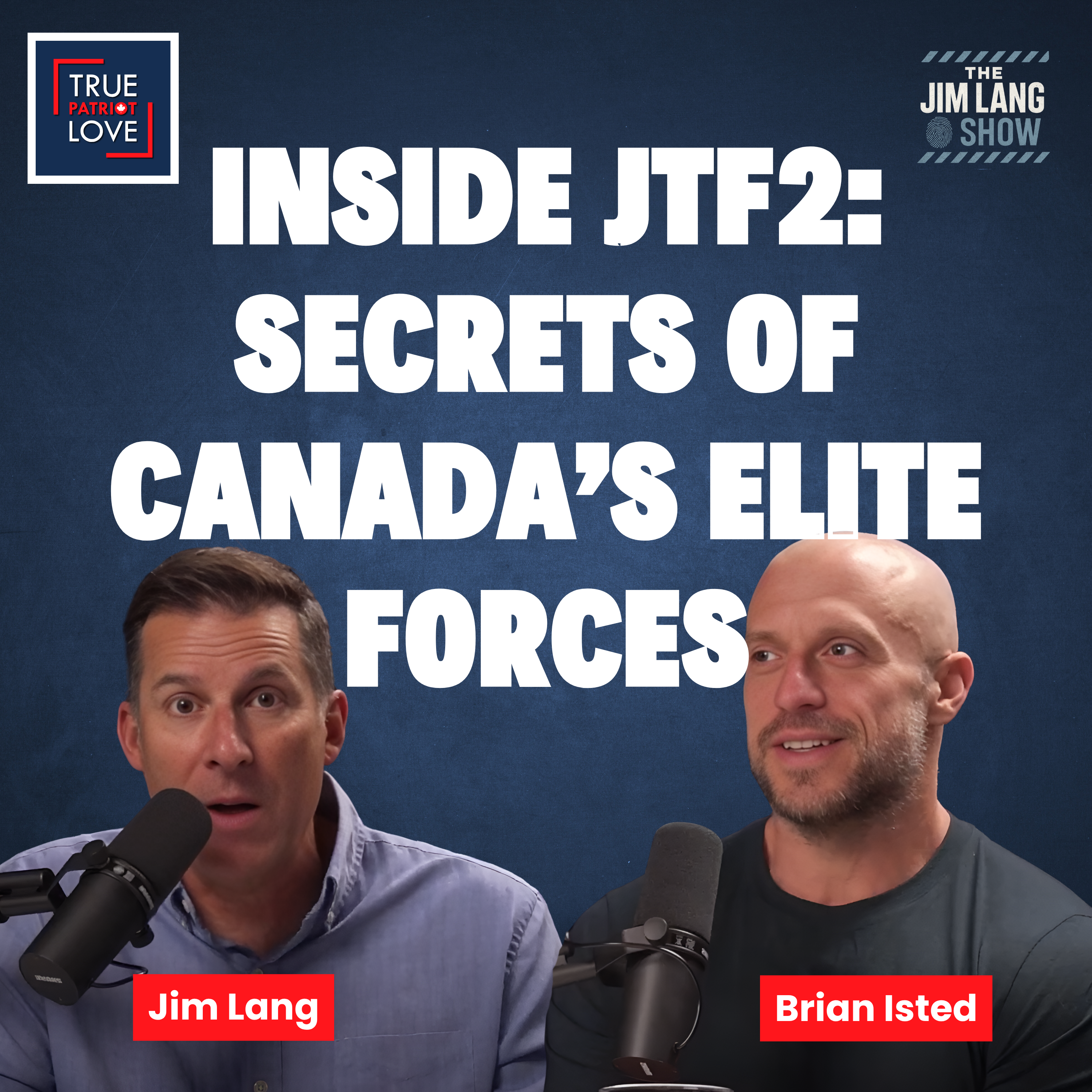
[00:00:13] Speaker B: In a country like Canada, which is over 41 million people, the Canadian military has approximately 60,000, give or take, frontline regular force soldiers. And of that just an elite few are members of the tier one operators, JTF2, the. The Canadian version of the Navy Seals or the SAS. And one of them joins me today, a former captain of the Canadian Army, Brian Isted. Brian, how are you?
[00:00:35] Speaker A: I'm well, how are you?
[00:00:36] Speaker B: Good, thank you. First of all, you know, we, everyone has. We were just talking before we started, had different journeys to the military. Tell us about your childhood and what your life was like maybe through high school and your early adult years.
[00:00:50] Speaker A: Yeah, so I grew up in Mississauga, so just outside Toronto. I guess that's part of the gta.
[00:00:55] Speaker B: Yes, it is, yeah, yeah.
[00:00:57] Speaker A: Relatively normal, you know what I mean? Middle class, lower middle class upbringing, playing sports, video games with my friends.
It was not strong academically, that's for sure. Like, I did okay my senior years. I did even less than okay. I was just, I don't know, probably spending too much time partying and enjoying, you know what I mean?
[00:01:15] Speaker B: It happens.
[00:01:15] Speaker A: Yeah. Like I had no grades to write home about.
A couple attempts at college.
I dropped out my first attempt. I just wasn't feeling my program and ended up going back for a Police Foundation's diploma at Humber. And then that segued into a bachelor's at Western University in criminology and with a minor in Poli sci. Wow. Which is like a Bachelor of Arts, you know what I mean? It's super useful nowadays. But that bachelor's enabled me to apply to the military. So I would have been 28 at that point. Cause I had a lot of hiccups and hurdles in between in my young adult years.
And so that bachelor's enabled me to apply to the military as an officer because I was either going the policing route with my Police Foundation's criminology degree. I had a lot of trouble getting hired in policing because of speeding tickets and kind of a misled youth there a little bit.
So I did many interviews that sort of went nowhere. And then along the process of a hiring freeze with tps when I was somewhere in that process of being applied to a couple other police forces in the background, the military ended up coming through with their offer first. So I, I took that, you know what I mean? So I joined the military as a second lieutenant in the infantry in a reserve unit here in. Here in Toronto. The Queen's Own.
[00:02:35] Speaker B: Oh, the Queen's Own Rifles. Well, it's One of the most famous infantry regiments in the history of Canada.
[00:02:39] Speaker A: Yeah, amazing history of that unit. Amazing guys there. I've had some really good leaders, some really good junior guys that worked for me, but I learned way more from them than they did for me for sure.
And that segued into a regular force contract offer that came through a couple years later, I think. I was in the reserve for almost four years and then joined the regular force as a military police officer and then immediately got a deployment to Iraq as a close protection team leader. So that's a fancy way of saying you're a bodyguard for high ranking.
It's. It's supposed to be on paper. You do it for a general, usually a multiple star general at that point. That's got PDSs. I think it's a person designated special status or something like that. I can't remember.
[00:03:27] Speaker B: That sounds correct.
[00:03:28] Speaker A: Yeah, I remember what all the acronyms stand for. But my tour is a bit different because we worked for one general and then there was 16 colonels that worked bene below him for him as part of the MLT or the Ministerial Liaison team which was a infrastructure rebuilding of Iraq through operation impact in 2018. Yes, that, that operation went on a lot longer than that, but I was there in 2018.
It's a US led mission. So we work very closely with the US military. Their CP guys and gals a lot of overlap with Italians, French, Germans, Swedes. We worked with a bunch of different nations there, but we had probably the most mobility and responsibility amongst the colonels that were moving around to have meetings with the MoI or the Ministry of the Interior. So they were equipping, training, funding, the Iraqi military police, different government assets that were trying to rebuild Iraq essentially with U.S. money and U.S. training.
[00:04:35] Speaker B: The interesting thing about all of this, you know, I can picture you kitted out with your, you know, bulletproof vest and your sidearm and your carbine and everything that goes with it. But in 2018, so little was said or discussed in the Canadian public, Canadian media, even the House of Commons that we had that kind of force over there, that kind of presence in Iraq at that time.
[00:04:58] Speaker A: Yeah, that's a good point. It's something I didn't think too much about in the years leading up to that, that deployment.
Afghanistan was still probably the main focus in the media. Absolutely. Still a pretty heavy presence there. I wouldn't say that Canada had a big presence in Iraq, but we definitely had a specialized presence there. There were still a lot of cansoft people floating around in the background doing their thing and the support elements that make that a reality there. Again, not a lot of numbers, but I'd like with all the really, really strong performing troops that I met over my career, I'd like to think that Canadian, Canadian troops in general, especially the specialized folks, act as kind of a force multiplier. So you can have one man or woman doing the job. That might take multiple individuals of another force to have the same effect type of thing. So just really lucky to have been around the people that I was with and the leadership that I was learning from.
[00:05:53] Speaker B: Your path is quite fascinating. Before we get to JTF2, were you in cyber intelligence after this time in Iraq before you went to JTF2?
[00:06:02] Speaker A: Yes. So I came back from the deployment in the fall of 2018.
So this would have been five or six years now in the military for me at that point. And the whole reason I got the close protection training and then subsequent deployment was because I was in kind of a holding platoon when I got posted to Ottawa in 2017 because the posting was to intelligence unit at CF incom. So Canadian Forces Intelligence Command, which is kind of is an umbrella that houses a bunch of intell teams that all work under it. It's a very big organization, a lot of bright folks working there.
[00:06:38] Speaker B: I know they have a facility in Halifax in the dock or it's attached to the Canadian Navy for their intelligence for all the ships out there, out there in the NATO thing. So yeah, it's a pretty complex unit in the Canadian military. Not a lot of people in the country know about.
[00:06:51] Speaker A: No. And probably for relatively good reason.
Yes, intelligence should kind of exist in the background doing its thing.
[00:06:59] Speaker B: Good point.
[00:07:00] Speaker A: Without needing the applause or the recognition. But I was not, I didn't have the levels of top secret and above clearances that enabled me even access to the buildings I was posted to really. So I was kind of stuck in this holding pattern or holding platoon where you're. You're literally not allowed to do the job yet because you don't have, you haven't been clear, literally cleared to see the get read in on the intelligence products and files that you're supposed to be working on and the other folks that are in and the meetings that you sit around and you overhear things. So there's a whole vetting process that takes over a year.
So very fortunately for me that year was spent training in academy in the fall and winter of 2017 and then immediately 2018 early we went to Petawawa to do our pre deployment before Iraq, which was A, a couple months long and then a six month deployment that took me to the fall of 2019 or sorry, it's the fall of 2018.
So by the fall of 2018 I had, my clearances had finally come through. So I think it was very early 2019 or very late 2018.
Top Secret showed up for me and then it was like, okay, here you hop on the treadmill on Sprint and start figuring out intelligence products.
[00:08:11] Speaker B: Now I'm not, obviously I'm not going to ask you to divulge state secrets and Canadian secrets, but for someone as intelligent as you, with your background and you'd been in country in Iraq, were even you surprised and were your eyes open once you got privy to some of this information?
[00:08:30] Speaker A: That's a great question.
So if I can touch on a meeting that I had, it wasn't my meeting, but when I was in, when I was in. I'm going to be sort of careful about how I word this because I don't know exactly what I'm allowed to talk about.
I'll be as, as vague but as detailed as appropriate. So the general that I was working with, working for in Iraq, who sort of recognized that there was not a lot of other officers around, like there was lots of colonels, you know what I mean? But I was a captain at the time.
[00:09:01] Speaker B: And you got stuff done?
[00:09:03] Speaker A: Captains? Yeah, they did.
[00:09:04] Speaker B: You're like the sergeant of the officer world. Really?
[00:09:06] Speaker A: Yeah. A captain. Yeah, kinda. And that's kind of how I'd like to compose myself, I guess. And I had a lot of folks around me that sort of wanted that kind of leadership. So it was, it worked both ways, I think. But I was the, the general that we were protecting over there recognized the fact that I was kind of on my own in terms of officer colleague.
So he said every week you're going to come and sit in on the, the senior, senior level meetings with the generals that like the US three star was there, the Canadian two star, who I was working for and then all the colonels. So they would give their back briefs every week of what had been accomplished within the MOI and where's the money going and what training are we getting done, is, are the uniforms coming through, the equipment, all that stuff. So they, they debrief the generals every week on what they're doing and how it's going.
And I can't remember exactly which representative colonel. Like you had a medical guy, you had an intelligence guy, you had people that work with the police or the Iraqi special forces and all these different Teams had different kernels that would sort of help facilitate, you know what I mean, their progress and their, their, their growth or their learning. So at some point in one of these meetings, one of the colonels was given his opportunity to stand up and he gives his piece and he said, well, and sort of as an aside to all the things that we're working on and I don't remember the exact dollar figure, but it was somewhere in the neighborhood of. I'll downplay it just so I'm not exaggerating the story.
Hundreds of millions of dollars had evaporated in front of the literal money that was being given to the Iraqi government to figure out, you know what I mean, how to train them and equip them.
And I want to say it was 250 million, it might have been 500 million, but like staggered, that's 10 digit amounts of money had evaporated into the ether over the course of a number of months or whatever it was. And like the answer from the generals in this meeting was essentially like, okay, next slide. You know what I mean? Like nobody and I'm a captain, you know what I mean? That's like toilet paper compared to the ranks of the people of the room that I'm sitting.
[00:11:23] Speaker B: Yes.
[00:11:23] Speaker A: And I'm just kind of in awe of what's going on around me and I have no idea what to make of this information or if it matters in the grand scheme of things. But it just sort of.
This is a very long winded answer to your original question of I think was, you know what I mean, your experience there, what was that like? And sort of did it light anything up for you? And this was kind of my first aha moment of there is an unbelievable amount of corruption and graft going on that I have no idea what to do with even this information. I obviously have no ability to affect it or at all or deflected or, or change anything, but at least I was sort of made aware.
And thank, I'm thank again I'm thanking this general for giving me the opportunity to sort of sit in on this and just become aware of what's going on. Because this was, this was pretty mind bending information to, to absorb as a junior officer in this room. And then I sort of somehow was able to silo that, put it in my back pocket and move on, you know what I mean? Next mission. You know, I mean I probably had two or three missions that same day where we were moving around the city in Baghdad. So yeah, like is that, does that make sense?
[00:12:36] Speaker B: It does, you know, and one of the. I really love the answer, Brian, and it really explains a lot. Like, I hear that answer and then I see how the American involvement in Afghanistan ended with tens of billions of dollars of brand new military equipment left there with, with, oh, well, and for a lot of. Not even veterans, but just average Americans. Like, wait, that's our tax dollars and we just. There's hundreds of billions of dollars we just left there. And that's. The general public mind doesn't understand that there is waste that goes on in these kind of ventures in these kind of countries.
[00:13:13] Speaker A: It's even something as simple if, like, if that's the sort of macro looking at the waste and the unnecessary expense of what goes on in the military, bring it down to a very micro level. Let's say you're in the field and you're on an exercise or whatever, and it's a day long, two days long, two weeks long or whatever. If you're lucky enough to have what's called a hay box meal. So you have food, warm food brought out to you.
[00:13:36] Speaker B: And it's like kind of container, right?
[00:13:39] Speaker A: Yeah, it's, it's like a, it's a tall sort of cupboard on wheels thing that they. That's heated.
Picture any catering event you've ever been to. Those, those steel rectangles full of, you know what I mean? Food. And they bring that to you and you serve it in the field and you're, you're lucky to have that. You're lucky to have warm feel food in the field. So you're pumped about that. But 99% of the time you'll eat, I don't know, 50% of it, maybe sometimes less, maybe a little bit more, depending on how many people you're feeding or how hungry they are. But then you'll watch because the fastest way to sort that out, because you got to get back to work, is to throw everything out. You know what I mean? And there's no way to take it home and repackage.
[00:14:18] Speaker B: Yeah.
[00:14:18] Speaker A: And put it in the fridge for tomorrow. Like, that's not how it works.
[00:14:21] Speaker B: Yeah.
[00:14:21] Speaker A: So.
[00:14:21] Speaker B: And you're back to rations the next day.
[00:14:23] Speaker A: Yeah. And. And you don't want rations. And again, this is not me complaining, you know what I mean? That the food is not allocated. Like it's better to have too much than not enough.
[00:14:31] Speaker B: Yes.
[00:14:31] Speaker A: But at some point it becomes, oh, my God, they just threw out 150 chicken breasts, you know what I mean? 20 pounds of coleslaw or whatever. And it's Just like this is, this is a lot of waste, you know what I mean?
I don't know what that's worth, but it's a very small example of kind of the same thing that takes place with 9 and 10 figure amounts of money.
[00:14:53] Speaker B: Obviously you're a very fit human being and fitness and exercise and strength training is an important part of your life. How much of that was an ongoing thing before you started to do the entry level process to become JTF2?
[00:15:09] Speaker A: Um, well, I, I always stayed in shape because I, I played competitive hockey up until my late teens and then I sort of stumbled into weightlifting at the. Literally just went to the gym with a buddy of mine I think when I was 18 or 19 and after the first day of just being super sore and him, he was really cool, he corrected all my lifts and showed me stuff. And our, in our abilities and knowledge at that level was very rudimentary, but it was still enough to sort of again ignite something inside of me. And I think I became addicted almost right away to the weightlifting side is kind of. Hockey had taken a backseat and now I needed something else.
[00:15:44] Speaker B: And that replaced it?
[00:15:45] Speaker A: Yeah, more or less. I became sort of super fascinated with that. Read everything I could about nutrition training, recovery. For years and years and years that was kind of all I absorbed as a, as a hobby.
That definitely helped me. Getting into the military and being my baseline level of fitness being much, much higher than the average person getting in and then, and then being again in my late twent, having sort of a better grip of myself and confidence and maturity that comes with someone that's not 18, that's, that's 20, 28, 29, kind of, yeah. Going through basic training. So does it help, you know what I mean, when you start getting ready to train for, to, to go to Cansoftcom? Like yes and no, because I'm 6:1 right now I'm probably about 220 pounds, which is probably roughly what I was a few years ago, um, making my way to the unit. But it's like, it's not that helpful to be big and muscly and heavy because there's so much, there's so much work to do all the time and so much stuff you have to carry.
In my experience, it's kind of the smaller, lighter, more nimble or agile guys that are better performers. Like they seem to be more robust and more resilient. Like if you're 5, 9, 5 10, 170 pounds, like you are the perfect specimen of the guy that's probably Going to outlast everybody else because you just have less body to manage, if that makes sense.
[00:17:13] Speaker B: No, it totally does Brian. And from what I, my research, what I understand about Joint Task Force two, our tier one operators, the it, there's an expectation that you're not going to have to be handheld getting there, that they're not going to you like they're expecting a professional who comes in who'll do the training and learn.
How soon into the process, beginning your work with JTF2 do you realize that you're working with some very elite special people?
[00:17:41] Speaker A: You learn that in selection.
[00:17:42] Speaker B: Oh, is that right?
[00:17:43] Speaker A: Like you're in your week long tryout before you even get there and you watch them, you're, you'll be given a task and then they'll demonstrate the task and then they say okay, do what I just showed you, you know what I mean? But you watch the guy do it and you're like okay, there's no way, there's no way I can do that. Or the speed at which he did it or the, or the whatever, you know what I mean? And you just realize that you're just trying to kind of survive but still perform.
You, you know, like, you know that way before you get there that these guys are different and you come across them sometimes in your career, whether it's seesaw, CGIRU, JTF2i, I didn't know many four, two, seven folks, the pilot, the helicopter pilots, but yeah, like they're just, they're just quiet professionals and you, you should be aware of that before you get there. But on selection you definitely learn it right away.
[00:18:34] Speaker B: So we, we. There's a myriad of things on YouTube about the physical expectations on selections just for people checking this out and watching you. What kind of physical things test did you have? Running pull ups, push ups. What did they make you do just to get through selection to even start the training?
[00:18:53] Speaker A: Yeah, you can count on doing a lot of running and pushing and push ups and pull ups. Okay. And sit ups. It's, it's very body weight focused. That's why again, the calisthenics portions tend to favor the guys that are a little bit lighter, maybe even a little bit shorter, you know what I mean? Ranges of motion are a little bit less.
Not to say that there's not monsters like Devon Larratt, you know what I mean, who have, who have gone through and that that guy's a freak of all proportions. Some people are genetic 5, 270 or so maybe.
[00:19:22] Speaker B: And he went through selection of that not much.
[00:19:24] Speaker A: Yeah, the guy's a legend and he's one of the best armor on wrestlers of wrestlers of all time.
But yeah, you can expect that you're going to be doing. You should get very good at running and very good at push ups and sit ups for sure.
[00:19:35] Speaker B: I have heard that no matter how proficient you are with a pistol or rifle that they'll retrain you on every weapon you've ever used. Is that was your experience?
[00:19:43] Speaker A: Yeah, I came in with probably more weapons training than most given the fact that I had done the close protection side which offers you time on the. The Sig 226 and your C8 which a lot of infantry guys won't get time with. Even if you're part of the combat arms, you're not really touching these as much as you should in my opinion.
So I came in with more experience but even. But potentially bad habits. Like I had high level instruction but not to that degree and not to the specifics that you're looking for there. So maybe it's a double edged sword. You might be better off coming in with nothing because then you have to don't. You don't have to unlearn anything. But it's also just good to be comfortable handling some of these firearms just because your exposure to them makes you very aware of kind of how they work and what to do with them.
[00:20:29] Speaker B: Sense of pride. What was it like to get the same color beret when you graduated?
[00:20:33] Speaker A: I didn't graduate.
[00:20:34] Speaker B: You never graduated. So I was under the impression that you made it through before and then you were part of it.
[00:20:39] Speaker A: So I was part of the. I was part of training.
So you, when you, when you get selected from. Select. Sorry when you pass selection and if you get picked up, you go through what's called soac. So that's your Special Operations Assaulter course. Okay, so that's a. It was at the time that I was doing. It was 13 months long. I see, so you started in, I think it was July Junior. I think it was July of 2021. And that would have run until I believe the end of July or even into August of 2022. So it's more than a year long that you're on this course.
[00:21:12] Speaker B: More than a year?
[00:21:13] Speaker A: Yeah. And it covers everything you can think of. You can imagine how much training you can get done in that time.
[00:21:17] Speaker B: So you're talking field craft, repelling from a helicopter, everything.
[00:21:21] Speaker A: Yeah, all this. All the things. And then I was about four, I was about four months into course when I just I demonstrated a bunch of different deficiencies with.
I had, I struggled in a shooting range or two, failed a couple tests, you know what I mean? There was things that, the pressure of it sort of got to me and the. To, to be honest with you, one of the things that was eating away at me the most when I was in this course was the fear of not just failing, but going back to the unit that you came from. Because when you, oftentimes, when you fail, they'll do what's called an rtu. So you return to unit. So you go back to your original unit and stay in kind of another holding pattern for. If you get to go back the next year or maybe the year after that, depending on a bunch of different things. And that's up to them to decide. But I was, I had left such a toxic environment of people who were just horrific leaders in one way or another that were malicious and petty and sad in their, in their careers because of things they did or didn't do. And they made it very clear to me as I was exiting that they were sort of just being really terrible to me. On my way out, I was very happy to leave, but terrified to go back. You know what I mean? And the attrition rate on this course is probably more than 50%, at least.
[00:22:40] Speaker B: By the sound of it. I can see why.
[00:22:42] Speaker A: Yeah, and, and, and, and different years will have different success rates. So maybe it's better, maybe it's worse than some. But I was, I was like haunted by this, this fear of you fail a test and it's like, oh, no, you know what I mean? Am I, am I going back or you get a safety, you know what I mean? Like, I'm going to accumulate these safeties and then I'm going to go back. So you, and these things follow you. Like if you get, if you get a safety in week one, you know what I mean? In week 52, like, that safety is still there, so they add up and then you'.
I had, I just, I struggled with a bunch of things. I was my own worst enemy for a bunch of different things and ended up experiencing so many health problems like, immediately thereafter that it just didn't, it wasn't happening for me no matter what anyway. So, yeah, like, didn't, wasn't successful in my attempt. But.
[00:23:30] Speaker B: Sorry, I must say that it's very noble and courageous of you to explain that in detail because I think a lot of people in life, no matter what the profession, the, the admission that, hey, I didn't make it, I Wasn't successful is difficult. That's. That shows a lot of maturity on your part, Brian, that you're able to explain it that way. Like, hey, I didn't do this and this and I didn't make it.
[00:23:51] Speaker A: Well, like, to be honest, I've. I've had a few appearances now with different folks and like, I'm just going to tell the truth. I have no reason to sugarcoat anything or to pretend something happened or that I'm something that I'm not. I'll tell you exactly what happened and how it went. And then again, it's obviously my interpretation of the events, so it's going to be biased to some degree. But I'm not going to fabricate and I'm not going to sugarcoat things.
[00:24:16] Speaker B: When did you start suffering from some health issues? I know that you were experiencing health issues along the way because you had the COVID vaccine, am I correct?
[00:24:26] Speaker A: Yeah.
[00:24:27] Speaker B: And then as a result, some people have been affected by it and you were one of them. So walk us through the timeline about when you got your vaccine, when the health issues arose and what it meant to you and how that affected you.
[00:24:38] Speaker A: Sure. So again, in segue from my last statement there, in the essence of transparency, I don't have proof of anything, but there's an awful lot of coincidences, you know what I mean? And sort of temporal associations, so correlations of what happened and then what happens sort of immediately thereafter. So the timing of it is very suspect. So, so backtracking a little bit to the spring of 21 when you get. When you. I had completed selection, so I finished all 10 days and then I was waiting for about a month or so when you get the email, and it's the best email ever, you know what I mean? That comes in your inbox at work that says congratulations, you know what I mean? You've been deemed a successful candidate throughout selection. So appear at this place at this time and bring this stuff. And by the way, you also will be fully vaccinated when you get there for force protection reasons or whatever they.
[00:25:35] Speaker B: Called it, because you could be sent anywhere eventually, right?
[00:25:37] Speaker A: Yeah. So, well, you're also going to be surrounded by these folks that you're going to live and breathe and sleep and do everything beside for the next 13 months. So in the essence of not letting anyone die from COVID or getting sick from COVID you, you will have these things.
So this was like two weeks before it was supposed to start. It may have even been less than that that I had to go get These vaccinations. So I called the orderly room or sort of the administrators that support roles handle this kind of thing for GTF2. And I said, I don't have any of these shots yet because I, I had my res. I had my reservations about doing this. I, I wasn't screaming from the mountaintops for people not to get it, but I didn't think I needed it. You know what I mean? I just demonstrated that I can keep up with the fittest of the fittest in the military with guys 10 plus years younger than me because 37 is a tall order to do my second selection. And it took a toll on me. Right. But I, but I was okay. And I didn't think that I needed this thing that I.
For a bunch of different reasons we can get into after if you want to, but sure.
Anyway, so they tell me you do need it. You will have this thing. Go get your first one, we'll figure out your second one. Because that timeline's too condensed to get both. Yes, they thought it was not a good idea and I agreed. So literally, I think it was that day or the next day, I drove to the base in Ottawa, Connaught Ranges, where they had the bed tent set up, where they were just churning people through in a belt fed needle, needle parade they call it. And you get there and there's a, I don't know, 3 by 4 whiteboard with green sharpie written of 25 different bullet points of like your, the information that you get when you're, you're, what's it, what's the word I'm looking for here? When you're sort of read in on something and you've been informed. Cons, this was your informed consent, right? Was your 20 bullet points on this, on this whiteboard. So then the, the, the doctor or the PA or whoever was there, you get to the front of the line, now it's your turn. And they say, did you see the board?
And I said, yeah. Do you have any questions? You know what I mean?
Yeah, tons. You know what I mean? But, but like I gotta be, I gotta report for work in two weeks. So here we go. So I sit down and this is where I'll own.
Like this was a bit of a cowardly act on my part because I really, really didn't want to do this. Like I, I, the anecdotal evidence at that point of it didn't, it didn't stop transmission, it wasn't stopping infection. Like all the goalposts that they kept moving to say oh, but it'll keep you out of the hospital. Oh, but it'll prevent you from dying. Oh, but grandma won't die because you all. So there was just so much misinformation, disinformation floating around. Like, I really didn't want to get this thing. I didn't think it was a good idea. But at the same time, I'd been working for the better part of a decade to be at this place, so sort of, I'm owning the sort of cowardice of. I just kind of sucked it up and took it.
[00:28:26] Speaker B: Because you want to get to the next step of your life, though.
[00:28:29] Speaker A: Yeah. Like, I really wanted this job. So I sat there, I took my first shot.
No issue other than a bit of a sore shoulder you get from injections, whatever. Like, that's just trauma to the tissue. So I rode my bike home, no issue.
It was about a month, I think it was almost exactly a month later that I was in Dwyer Hill. So we were doing our indoctrination still. It was about a week or two into the.
And the platoon warrant stands at the front of the class in one of our break periods and said, hey, fellas, is there anyone here that still doesn't have a fully vaccinated medical profile?
Do you not have any shots or do you not have two? And only myself and one other guy put our hand up. So in a room of dozens of people, candidates here, where you and one other guy are the only ones that are not sort of toeing the line, he basically looks at you and says, go to the med tent and get it right now. Like, this is, you're, you're. This is happening or you're leaving type of thing. Right. And I'm not, and I'm not putting any blame on the individual that said that. I actually have a lot of respect for this guy and we worked together for a little bit and he's a. He's a good dude.
[00:29:32] Speaker B: But that was his rules of engagement he was working with at the time.
[00:29:35] Speaker A: Yeah, well, he's being told, make sure that the platoon you're managing is sorted out. So literally we walked over and I got my second shot that day.
And I had, I think, every conceivable side effect that night that you can.
[00:29:49] Speaker B: Have of the sweats, the shakes and all.
[00:29:51] Speaker A: Fever, chills, nausea, nausea, just non stop. Like basically horrific flu symptoms that started occurring almost immediately because it was kind of at the end of the day when I did it and then went back. I got no sleep that night.
Like, I was literally shivering and sweating the whole night and then had to be at work the next morning.
Took me a couple days to bounce back from that just because of the sleep deprivation that I experienced. And I. I don't think we were on the range until the following week, so luckily I wasn't shooting that day.
But, man, was it. Was it a rough night after that second shot. But then if I jump way ahead in the story to about a year or so later when I was describing those side effects to one of the doctors, hematologist, I think she was telling me that that's normal and that's a sign of a positive immune response and that your body's. Your immune system is healthy and strong and you're supposed to react. That you're not supposed to react that way. But it's not negative or something.
[00:30:45] Speaker B: It's not a red flag.
[00:30:46] Speaker A: Well, it was a red flag for me to have this conversation with this doctor because I'm like, that's. That's odd. You know what I mean? That someone would say that.
Anyway, going again, I'm like, I'm rambling here a little bit.
[00:30:59] Speaker B: Brian, please.
[00:31:00] Speaker A: So, so to. So that was in late July of 2021. So it was approaching August time frame by the time I got my second shot.
So fast forward two months and I'm in the field in Petawawa. We've been there for about a month, and it's almost October, and I have this pain behind my right knee, like, at the top of my calf that, like, we've been going hard now for weeks and weeks. Hurt? Yeah, like. And I'm an old man there compared to most of. I actually wasn't the oldest guy there, but I felt like I was most.
[00:31:32] Speaker B: Oh, you weren't.
[00:31:33] Speaker A: There was one guy older than me by about a year, and he seemed to be doing fine. So, like, the aches and pains come with this kind of training. Like, you're running and you're literally running and gunning oftentimes all day, and then you're doing it at night with NVGs on.
[00:31:47] Speaker B: And how much weight are you carrying on your pack?
[00:31:50] Speaker A: Anywhere from like 20 to £40 consistently. Plus your weapon, plus anger. Doing all this ammunition is heavy, right?
[00:31:57] Speaker B: Yes, it is.
[00:31:58] Speaker A: So, like, I just think that I'm. I'm old and I'm. And I'm suffering. So you just put it away and you deal with it and you go to sleep and try to recover.
But I have this nagging pain in my right leg that I'm. I'm not quite limping. Yet, but it's every time I take a step on my right foot, I feel it. Huh. So again, comes back to the performance challenges for me, all the stress I put on myself. I met with the leadership and they sat me down and basically said, like, you're obviously struggling, like we're, we're pulling you off course. I didn't know what my future was at that point, but I knew it wasn't continuing. So literally the next day I'm clearing out from the unit and I. And this, this pain in my right leg is, is double or triple what it was. So I'm not quite in agony yet, but it's like, okay, something's wrong with my right calf. I think that I pulled it or it's tweaked it or something maybe during one of the assault training things that we were doing. And you're, you're often running and jumping and diving and.
[00:32:55] Speaker B: But it's not a pain you felt before, is that correct?
[00:32:57] Speaker A: No, it's. It's unlike anything I'd felt before. I just felt it was something in my calf. Okay, so now, so now I'm home and I'm kind of on into transferring back, sort of administratively transferring back to my old unit. And I think there's about a one or two day in between. So I've been off course for maybe a few days and the pain is so intense in my right leg now I can't, I can barely walk and like standing up is very, very painful.
So I'm like, okay, something's wrong here. So I sort of drove myself to the military hospital in Ottawa and I kind of hobbled in there like again, barely being able to walk. Like this was next level pain for me. And I sat down in the chair and they kind of rushed me through because they could see how uncomfortable I was. And the nurse, and I wish I could remember his name, but he had a pretty good intuition of what I was dealing with. So they rushed me to an ultrasound where they discovered a 6 centimeter blood clot in my right leg.
And that's no joke. No. So they put me on blood thinners right away. I was informed like, I wasn't going back to work anywhere anyt soon. You're going to take these blood thinners for at least a month. You're on bed rest, sort of just relax and go home. Type of like, I didn't have to stay in the hospital. Yeah, my, I thought I was going to have to do an overnighter, but they actually allowed me to go home. So I was able to drive back.
My girlfriend at the time had come and gotten me because she wasn't sure if I had to stay there. But she, she, she came and saw me there and then we both drove back and I was literally just like horizontal for a couple weeks because I couldn't just standing up was, was horrific.
And I'd like to think I have a relatively high pain threshold, you know, I mean, compared to, I think the average person. I can push through certain amount.
[00:34:41] Speaker B: And Brian, let's be honest, at that point with your training just to get to JTF and through that, you're probably in the elite 1 or 2% fitness level some of your age in the country.
Yeah, you think about that?
[00:34:53] Speaker A: Yeah, I appreciate that. It's, I made a very deliberate attempt to or, or effort rather to, to be there and maintain that. So it's like part of that is like pushing through the aches and pains of the training that gets you there. So pushing all that sort of out of my mind while it was happening. I was now sort of faced with this potentially career ending injury because if you, if you have something where you have to be on blood thinners forever, you're definitely not being part of a tier one assault unit where if you get nicked by something or, or shot like you're just going to bleed out. Right. So yeah, so I'm dealing with this sort of mental challenge of like, oh my God, feeling course, failing health, failing relationships at work with previous leadership and like there was just, there was almost nowhere to turn where it made sense for me to put the pieces together of what I was dealing with at the time. It was kind of a lot to manage and it was just test and then it was just week after week and month after month of ongoing tests and ultrasounds and blood work and hematocrit levels, which is your sort of thickness of your blood which causes blood clotting. And eventually the clot dissolved and went away according to the ultrasounds. But then I started sort of realizing that the back pain that I was also experiencing during course was creeping up and creeping up and creeping up and kept getting worse and worse. And I wasn't, I was no longer training. Like I was basically on bed rest for a long time.
[00:36:17] Speaker B: So why is your back hurt?
[00:36:18] Speaker A: So why is my lower back as sore as, even more sore than it was when I was doing running and gunning?
So I started asking the doctors questions and ask them if they can look into it so they do more imaging, more blood work and it turned out That I have a. I. They had this is now, I guess the summer of 2022. Like it was a long time of me sort of on the downturn medically. And by the summer of 22, the doctors basically confirmed to me that I had a degenerative autoimmune condition starting in my lower back. So my spine is fusing together.
[00:36:52] Speaker B: Really?
[00:36:53] Speaker A: Yeah. In your SI joint. It's called ankylosing spondylitis.
[00:36:56] Speaker B: Yeah. Mick Mars from Motley Crue had that.
[00:36:58] Speaker A: Yeah, yeah, yeah. So that's.
[00:37:01] Speaker B: I know that because I'm a crew fan, but. Yeah. So yeah, yeah.
[00:37:03] Speaker A: There's a. There's a few people that have talked about it openly that I started looking up in their experiences and their treatments and whatnot. So again. So another issue compounded. It was around the same time that I was getting ready to be released. So now many more months go by and they're putting me on this pain medication, this anti inflammatory medication. Nothing's working.
I'm basically preparing now to get released from the military because like they're like I'm a. I'm a bag of hammers at this point. I mean like I'm not doing much for anybody. I could barely sort of keep my. Myself together. So. Right.
The medical that they give me on the. So once they sort of. Once you prepare for release, they give you a release medical. So they give you an ecg, your blood pressure, your hearing, I think vision. They want to see. They want to sort of compare your.
Because you do all that stuff when you get in and then they want to compare it when you get out to see where you're at and what's. What's better. What's. Probably nothing's better but like how. What's worse and how much worse is it?
So the ECG that they gave me came back with some really troubling information that I had sort of an irregular heart rate and rhythm. So like they started. So then I had to go see a cardiologist specialist and it was just one thing after another. Like it just never. I had to wear that.
I forget what it's called but there's a device that's about the size of a cell phone my wife a little bit thicker and it's. And you wear wires. You're just totally wired up, just.
[00:38:28] Speaker B: And like they're basically go through a couple days and they want to see.
[00:38:31] Speaker A: Oh, it was a couple of weeks.
[00:38:32] Speaker B: Yeah. Well the guy stiff.
[00:38:33] Speaker A: Yeah.
[00:38:33] Speaker B: But they want to monitor what happens.
[00:38:35] Speaker A: It was a real treat to wear this thing for two weeks where luckily you can take it off to shower, you can clean yourself, but then you put it immediately back on. So you have to sleep with this thing.
They couldn't find anything conclusive from this device that I wore, but I'm still seeing this cardiologist every once in a while to make sure to this day. Yeah. To make sure that whatever they detected on that ECG is not still there, getting worse or whatever. So, like, the decision to medically release me I think was a relatively easy one for the military.
That happened in. I guess it's been almost a year. It's been a year and a half now because it was April of 2020.
Yeah, I was, I was what's called 3B or medically released.
So my, my pension activates immediately. It, it's, it just, it makes it financially, it's, it's much more beneficial for that to. To happen. Especially if it happens to you when you're younger because you're no longer able to pay into your pension, but they sort of immediate annuity you anyway.
Yeah, man, but it's like it's just been a. It's just been a battle of health and mental health for a long, quite a while now.
[00:39:37] Speaker B: And I want to get into this with you, Brian. Jonathan Taves of the now the Winnipeg jets missed two years of playing in the NHL from long Covid. And there are all these stories about elite athletes, triathletes, marathon runners, people of elite fitness levels like yourself who were affected from the vaccine or Covid. And I'm just a regular, you know, dad who got multiple shots and I try to exercise, but not at that level. And I really had like. So there's a real correlation between elite fitness people who got affected by it and just average people who didn't. It's. I find that weird.
[00:40:13] Speaker A: Something that I think is. I agree. Something I think is interesting is that I don't know of anyone, again, anecdotally, I don't know of anyone or haven't really heard of anyone that has long Covid that isn't vaccinated.
[00:40:26] Speaker B: Yeah.
[00:40:26] Speaker A: So like that long Covid in quotations really seems potentially like it could be vaccinated, vaccination related or maybe a combination of you got Covid and the vaccination. Like maybe you didn't need that after you already had Covid, as every other vaccination in history has gone down before this one. But no, I agree with that. There was definitely some type of correlation between the more fit you were, the more. And young. Yes, the more the likelihood that you would have a serious side effect.
[00:40:57] Speaker B: Because there was a lot of examples.
[00:40:58] Speaker A: Of that, Mike, a lot of examples of that, especially with heart problems people. And a lot of those heart problems were, are permanent for the folks that are suffering from myocarditis or other things.
[00:41:08] Speaker B: Growing up I had assumed that you and your family, you had measles, mumps, all those kind of vaccines as a kid.
[00:41:14] Speaker A: Oh yeah, I took everything.
[00:41:15] Speaker B: And then when you joined the military, you had a round of vaccines as well and you would have had some before you went to Iraq.
[00:41:20] Speaker A: Yeah, you, before you deploy, you get another fresh booster of pretty much everything. And I took everything, I sat there, I never questioned anything, I never had a reason to. And no side effects as far as I can tell? No. No side effects from that stuff.
[00:41:33] Speaker B: Yeah. So I just want to establish that you're not some wackadoodle anti vaxxer that people see in the news. You're someone that had the COVID vaccine and had an adverse physical reaction after the fact. And there are examples of that in medical textbooks.
[00:41:47] Speaker A: Yeah, it's the risk is not zero. You know, it's safe and effective but like safe as according to definition implies no risk.
So that's not. So it's definitely not safe and it sure as hell wasn't effective. You know what I mean?
[00:42:03] Speaker B: So Brian, I've always wondered about this, you know, a tier one operator, by its very nature, as you say, you can get the best of the best from the PPCLI, the Van Doos, the RCR, all these units across the military apply for JTF2 and barely half make it. Should there be two sets of rules for the elite tier one operators and people just in the regular military?
[00:42:25] Speaker A: Rules for what?
[00:42:26] Speaker B: Rules for everything. Rule like you, you talk about being in country, should you have to have one rule for every single person the Canadian Armed Forces about.
[00:42:35] Speaker A: Are we talking like dress and deportment?
[00:42:37] Speaker B: Dress and deportment, vaccines, everything else.
[00:42:41] Speaker A: Dress and deportment. I can.
This, this, this, this could get real slippery real quick depending who you ask.
For things like dress and deportment, I think you should be clean cut all the way through your basic and sort of trades training until you're sort of professionally qualified.
I don't see any harm in enforcing at least a strict standard of how you appear professionally. And then like some of the inspection stuff of making your bed and folding your shirts and cleaning your soap dish and stuff like those, those go a bit far in my opinion. I think that's a bit again it's, it's not about having a clean soap dish. It's about attention to detail and following instructions. So I get, I get it.
But at the same time, like, sometimes you'll come back, you'll. You would have been outside training all day. You'll come back and your whole room's been tossed upside down. And now all. And your, your closet's thrown down the hallway, you know what I mean? As resilience training. And it's like you're going to learn something from it. You don't really learn anything from that other than how to, like, you're going to get less sleep now because you.
[00:43:41] Speaker B: Have to clean up the mess.
[00:43:42] Speaker A: Yeah. So to answer your question, I. There should be two sets of rules for people that are untrained and people that are now trained.
If someone has long hair and a beard, I don't give a shit if you do your job. You know what I mean? Do you show up to work on time?
Are you a positive contributor to the team? Do you come up with solutions?
Do you always complain? You know what I mean? Like, I, like there's so many variables that really all that matters is are you doing your job and are you an effective soldier? And by soldier, I mean sailor, airman, whatever, woman. Yeah.
[00:44:12] Speaker B: Because.
[00:44:12] Speaker A: Brian Cook, Logistics. I don't care. Just do your job.
[00:44:15] Speaker B: What you're talking about is a reality in every place of work, every business in the world that no matter if you are a cook on one of the naval frigates or you're a tier one operator, you're part of a team in a workplace. And you know, there is a certain level of professionalism, no matter what your job, whether you're an accountant or an.
[00:44:34] Speaker A: HR or whatever it is, just to back up a little bit, like again, on treating people the same, when you get to the more advanced teams, you have direct access to what's called a weapons tech. So this guy or gal is a wizard of firearms, you know what I mean? Really? And they will upgrade your grips, they will upgrade your sights, they will upgrade.
[00:44:56] Speaker B: Your what to what your specs are.
[00:44:58] Speaker A: Yeah. So like, if you have a bigger hand, you might need a bigger grip on your pistol, you might need a different rail system to accommodate. You prefer what's called a bad lever, maybe on your C8. So a bad lever is a battery assisted device. So it's a, it's a, it's a attachment that enables you to hit your bolt catch with your trigger finger.
So instead of having to use your left hand to engage your, your bolt Catch to slide that bolt forward again in terms of a reload once you put the magazine in. Because that lever wraps around and touches the.
[00:45:31] Speaker B: Yes.
[00:45:32] Speaker A: Your bolt catch from the trigger side. You just have to move your finger a centimeter and it's locked and loaded. So as soon as you put your magazine in, hit it. It's. It's shaving fractions of seconds. So these are things you're allowed to do in CanSoftcom, but you're definitely not doing this in basic training because you haven't really earned and demonstrated the fact that you're profic and safe enough that you can do these things. So I guess that's my way of saying you should treat everyone the same until they've demonstrated. Yeah.
Is that.
[00:46:03] Speaker B: No, no, no. It totally makes sense. Before we get to some where you're at now in your future. I. I always think of someone like you who had your experience and what you did in the military. If I could wave a magic wand and make you the minister of national offense, what are some of the two or three things you would do that from your experience to change things for the better?
[00:46:21] Speaker A: Oh, man.
I got asked this once too on a. On a pod earlier this year. And it's such a wild question for a junior officer with sort of limited, you know, in country. Yes.
[00:46:32] Speaker B: Reserve and regular force.
[00:46:34] Speaker A: It's a great question.
The things that I'm aware of that still exists that are problematic is the DEI stuff like tampons in the men's bathroom or like specific recruiting drives to get minority or whatever representation in whatever trade or the forces as a whole. It's like, like I never met anyone in the military that ever cared about where you were from or what you looked like to a certain. Unless you were sloppy and lazy. You know what I mean? Like that's, that's kind of part of it. But it's.
If you, if you can keep up and you're doing your job, I don't care where you're from or what you look like or you're green, brown, purple, black, like it doesn't matter. And again, no one else does either that. I know.
But to fix the problems, like the DEI thing has to go for sure. It's just destroying morale across the board. And it's too top heavy. The Canadian military has 150 or something generals for a military that is.
[00:47:31] Speaker B: We have that many generals, it might.
[00:47:33] Speaker A: Be more than that. Again, don't quote me on that. I'm giving a ballpark.
[00:47:36] Speaker B: Okay.
[00:47:36] Speaker A: I don't know if we can look this up in real time.
[00:47:38] Speaker B: I'm sure we can but Nick can he.
[00:47:40] Speaker A: It's. It's one of. It's I think one of if not the most top heavy militaries in the world. So you have this. You have dozens and dozens and dozens of generals who are just quite literally padding their pensions with these postings to Europe and of course Australia. And it's like yeah, like these guys have earned it. They've been there.
[00:47:57] Speaker B: Then they go to a board on a, you know, company.
[00:48:00] Speaker A: But. But the problem is that it's just slowing everything down to a crawl.
[00:48:05] Speaker B: 145.
[00:48:06] Speaker A: There you go. I wasn't too far.
[00:48:07] Speaker B: No, you were pretty close.
[00:48:09] Speaker A: That's a lot of go forward general officers to have for. And you said I think 60.
[00:48:14] Speaker B: We're just under 60, 000 regular.
[00:48:15] Speaker A: I think it's way less than. There's no. It's not even close to that for reg force. I think that's total with the reserves as well. So if you combine army, navy, air force reg and reserve force, I don't think it's even 60000 anymore. Yes, it's could be as low as like 45.
[00:48:29] Speaker B: And when my dad joined in 57 in the Air Force, the Canadian military was close under 50000 for a country half the size.
[00:48:37] Speaker A: Yeah. Yeah, exactly. And again, I don't know if it's necessarily about numbers of recruiting, about having a bigger military. Probably doesn't necessarily make it better. If anything, again, putting my MND hat back on that you just gave to me, I would probably trim it down even further starting with the generals and then getting rid of a lot of the folks who are. I'm not sure if you're aware of this or not, but this was going back four, maybe five years Covid era time frame where they eliminated the fitness testing for promotions. So I think there was always an option to sort of opt out of doing fitness testing to some degree. Where would I know that it would deny you a promotion and it would definitely deny you a deployment. So you could still sort of exist in the background as a. As a plug who's not willing to be fit for their job and still sort of maintain your job and to. To in some capacity. Yeah. But then they got rid of it for needing it for promotions. So I just, I can't imagine that's a good idea. You know what I mean? We. And I'm not saying everyone has to be selection ready. Like I don't recommend doing that. It's actually not mentally or physically healthy to maintain that for a long period of time anyway. So I would probably trim it down even more so that the people that are there are just super capable people that actually want to be there. Like if that happens to be 30,000, 20,000, I, I don't know. You know what I mean? There's. It's hard to put a number on that because I really have no clue. But I, I think having a really specialized folks who are really motivated and want to be there, pay them more money because they've earned it and then sort of enable them the same treatment as we just talked about. Like if you want to grow your hair, I, I can't imagine caring. If you want to have a beard.
Good.
[00:50:19] Speaker B: A lot of countries, militaries allow it, especially Scandinavia. And they seem like they're ready to rock if they have to.
[00:50:25] Speaker A: But you're also going to be fit, you're also going to be capable, you're also going to have the attributes and you're going to be hoping to move up in your career. And then at the same time, once you get to that point in your career where it's just pension padding and what I call military tourism, you're just being posted around the world on the government's dime. It's like, it's like this isn't helping anyone anymore.
[00:50:44] Speaker B: No.
[00:50:45] Speaker A: Like this isn't part of a team. This is a, this is a me event and I'm just gonna.
[00:50:49] Speaker B: And the more ranks can see that. Brian.
[00:50:50] Speaker A: They're not stupid. Oh yeah, they definitely see it and they're definitely resentful of it. Not all of them, you know, I mean they don't walk around. No, no, no. With a dartboard with your photo on it. You know what I mean? But they're like never saw one of those. But like they, they do see it and they do get it and they're kind of wondering why their PMQs are. I can't remember what PMQ. Private Military Quarters.
[00:51:08] Speaker B: Yeah, that's why I grew up in.
[00:51:10] Speaker A: They're wondering why their PMQ has mold in it. But this, but this General. You know what I mean? As is in his third posting to Greece.
[00:51:16] Speaker B: We used to have to put a plastic in our windows growing up because the wind would blow in the winter.
[00:51:20] Speaker A: Oh man. Some of them are right rough. I've seen some that are just rough.
They need, they need to fix that. Like these people deserve the dignity of, of having a home that's not gross.
[00:51:30] Speaker B: Before we. I want to ask more questions about you But I'm curious to get your take.
The war in Ukraine has changed the, the paradigm of warfare so much. Because of drones.
We're seeing $500 drones destroy $10 million armored vehicles with ease.
How prepared are NATO countries, Canada, all of them, for a warfare that includes that much drone warfare?
[00:51:56] Speaker A: Man, that's sort of out of my pay grade.
[00:51:58] Speaker B: Okay. I was just curious.
[00:51:59] Speaker A: It's a great question. You have a lot of good questions. So that it's sort of, I know it's being done by a state backed force, but the Ukrainian military is taking part in these. But it's, it's very sort of guerrilla style warfare where you're making the most of the least type thing and you're using your enemy's strength almost as a weakness by crippling their supply lines or their really expensive infrastructure with the minimal amount of effort or investment.
How prepared is a NATO force to deal with that? I don't think anybody's really prepared to deal with that just because of how precise and stealth some of this new technology is. Like you can do a lot of damage with a very small, inexpensive piece of equipment.
There are warning systems like in Baghdad we had really sophisticated early warning systems for incoming artillery or artillery as well. Artillery and rockets. Wow. But they would also detect drones and, and each, each rocket, each artillery shell, each drone or insert, you know what I mean? Whatever incoming aerial problem has a certain signature to it. Like whatever. I am not a scientist. I'm not going to pretend like I understand the technology behind this. So like birds would fly freely around the base and that doesn't set it off because it knows that it's a bird. But a drone lifts up 2km away and, and in seconds we get an alarm in our base.
[00:53:27] Speaker B: Really.
[00:53:27] Speaker A: Or the same thing.
The rockets or the artillery would come in so fast because those things can go kilometers in seconds.
The alarm would go, but it's probably already landed. So you're getting in a, you heard the shell land hopefully and you could get away from it. But the alarm will sound that there's like something's happening. There might be more coming obviously, so sort of get inside, get away from it. But the, the technology does exist to identify an incoming problem via drone.
But I don't know that it's Obviously the examples of them using them effectively is proof that it doesn't necessarily work as well as it's supposed to. But I, I, we notification drone warnings because we were given videos of ISIS and Iraqi insurgent capabilities and what they would do to disrupt or Assault allied forces would be to just something as simple as a drone flying at the exact height known that it will have about a 3 or 4 second fall for a grenade because the fuse on a grenade is about three and a half, I think four seconds.
So if you know what the, the, the fall time of a drop time of a grenade is and you fly a drone at exactly that height, you can remotely pull the pin on a grenade and then drop it. So exactly when it lands or almost immediately after it lands, it detonates because it causes way more problems than if you flew it and dropped it and then someone saw it and kicked it or exactly, someone saw it and was able to jump behind something.
So they were like, this is a real threat. You guys need to be aware of this. And there's nothing you can really do to stop it. If you're out on a road move and, and they decide to drop a grenade on your armored vehicle, is it going to kill you?
I don't know, maybe not. But it's certainly going to ring your bell and your vehicle's probably not going to work if it lands in the right spot. So you got a whole other host of problems now. But I don't think that there's any allied country that can effectively deal with that type of guerrilla style warfare because it's just proven so effective.
[00:55:29] Speaker B: I've talked to many different people, whether athletes and, or entertainers or who had did something for a while and stopped and over time they look back and that time gives them better perspective. You've had a bit of time now since you've had to medically leave the Canadian military. Do you have a different perspective on your time in now, Brian, with a little bit of time space since then?
[00:55:49] Speaker A: Wow. Yeah, no one's asked me that before.
Yeah, I definitely do.
Again, very, very fortunate I think I was in my career to have worked not only in the opportunities that I had, but with the folks that I had as well. Especially with some of the leaders I had.
There's probably more bad leadership that I was exposed to than good. But the good ones really leave a mark where you can kind of.
The bad ones you treat as kind of dead weight and just leave them in your, leave them in the dust and, and move forward.
[00:56:19] Speaker B: But the good ones really stand out.
[00:56:20] Speaker A: But the good ones really stand out and you try to apply the things you learn from them not just in your, in your professional life, but in your personal life and the relationships that you develop with, with other seniors or guys that, or gals that work for you in the junior ranks and you. One of the things I'm most proud of, looking back, is the professional and personal growth I witnessed of the guys that were on deployment with me. And just seeing them go, the guys in their early 20s, some of them sort of not fresh off basic training. They're all professional soldiers. They have been for a little while. They're still quite young, but just how well they adapted to the environment and were looking for work and proactively solving problems. Because I had enough headaches administratively as a, like, one of the only officers there in charge of my team. So it was like I had to handle a lot of paperwork, whereas these guys were really good at equipment and tactics and all the things that make a good corporal or mass corporal sergeant. Like, these guys are just switched on. And it was amazing to watch them learn and grow and make my life so much easier. And I'm still friends with a lot of them to this day.
And if I can sort of pivot a little bit and speak to what they call me and talk to me about, like, they're embarrassed about the military. Like, they're. They're disgusted with the leadership. And you're.
[00:57:36] Speaker B: You're the current state.
[00:57:37] Speaker A: Yeah. And you're. And you're supposed to be apolitical. Like, you're. You're wearing the flag. You fight for the flag. You fight for the guy beside you. It doesn't matter who's in office. It doesn't matter that Trudeau is an absolute joke or Carney, which is basically Trudeau 2.0. But, like, it does kind of matter to these guys, and it kind of should. Like, you should have someone that isn't a complete opposite of everything that you kind of. The reason that you signed up or the reason that I signed up was to be amongst people that were high performers in a very challenging and dynamic environment and something that you're proud of doing. You know what I mean? These are the reasons why I left sort of the business world that I was.
That I had spent time in during college and university, which was considering that career as kind of a backup. Right. And I was like, I'd rather be more of. In an environment where I'm around, kind of like when I played hockey, I want to be around guys who are athletes that care. You know, I mean, that take pride in this, and that's. That's the military, and that's the people that I was exposed to.
[00:58:37] Speaker B: Now here's. You just brought up a really good point. I think most people watching this don't understand.
They're probably thinking, well, what difference does it make of Trudeau or Carney or Prime Minister to someone in a unit in the military?
[00:58:50] Speaker A: It's, It's a. Like, it's a. It's a pride thing. It's a professionalism thing. It's an intrinsic, for lack of a better term, giving a. About, okay, what is going on behind the scenes? Because that stuff does matter.
And I remember I sort of very briefly, on my way out, considered moving later, like, before my health problems completely spiraled out of control, I. I was thinking, okay, well, I don't really feel at home here anymore.
Where else can I go and use my skill sets to be of value? And I. I had applied to the RCMP to be on the Prime Minister's protective detail.
[00:59:24] Speaker B: Oh, right on. Yeah.
[00:59:25] Speaker A: Because that's who handles.
[00:59:25] Speaker B: And you've done protective detail before.
[00:59:27] Speaker A: Exactly. I did it civic side as a bodyguard as well. Like, I have a lot of experience doing this, or enough anyway. And I, like, I made it, I don't know, well into the. The process of the application before I started having to sort of sit down and think, like, would I take a bullet for this person? Because that's quite literally your job.
[00:59:47] Speaker B: Correct.
[00:59:48] Speaker A: And I. And I decided, no. Like, I'm not going to take a bullet for Justin Trudeau. Like, is that a joke?
And again, you're supposed to protect the office. You protect the position, and this is what they tell you, and they beat it into your head and this and that, and it's okay, I get it. But at the end of the day, am I still going to sacrifice my life and never see the people again that I care about and have them deal with the loss of me or whatever? And maybe that's selfish of me, and fair enough, but for Trudeau, no, I wouldn't. He's. He's a joke, and so is Carney, for that matter.
[01:00:21] Speaker B: How much influence can the company commanders, the Sergeant Majors, the NCO's in a unit, keep the people in the unit, the men and women on point, and sort of shield them from maybe that. Like, hey, forget about who's in office. This is our job. This is what we're going to do, and we're going to do it together, just in spite of them? Is that. Is that doable, or is that.
[01:00:44] Speaker A: I don't know where you dug these questions. Like, I'm sweating trying to figure out the best answer to these, because I. I've not really thought of that before. But the. But it's. It's a really good question because you're asking about top cover. Like how much top cover do you get from the RSM and your sergeant major and all these people?
[01:01:00] Speaker B: So my dad was an NCO and from when I grew up the, the senior non commissioned officers, they make things happen that.
[01:01:08] Speaker A: Yeah, yeah, everyone knows that. Like you, you learn that especially as a junior joining as a direct entry officer, you learn that the warrant and the sergeants is who runs the platoon and you're the guy who pushes papers around. But can they provide enough top cover to I think maybe 30 years ago, but now because there's so much information and there's so much access to immediate headlines and yeah, I never thought, I'm not talking about clickbait nonsense. I'm thinking like if you want to do a deep dive into any subject, whether it's the person in office, the policy, the corruption, like I don't think they can anymore just because they, so they can to a certain degree they can sort of try to protect you from the bureaucracy machine that can overtake your life and become a nightmare. Like they can definitely help with that. And I've tried to do that for guys that were getting like a jerk sergeant major breathing down their neck or their, or their OC or whoever was. Like I had one guy try to, he, he was given what's called a cftpo, which is your, basically your marching orders that you're going on deployment.
[01:02:18] Speaker B: Okay.
[01:02:18] Speaker A: And this outranks everyone in your chain of command. Like this is coming down from. You know what I mean? The, the army commander is sending this.
[01:02:28] Speaker B: Down saying from NDHQ and auto.
[01:02:30] Speaker A: Yeah, like Corporal Bloggins is going on deployment. Like he will be at pre deployment training under the guard of, not the guard of, but the. Under the command of Captain Isted. You know what I mean? As they prepare. Da da da. So his chain of command was saying like, I don't care who Captain Isted is. Like, we don't know this guy. Like you're going to show up for, you're going to show up for parade on Monday or like we're going to report you awol. So he calls me and he's like, man, what do I do? Because I know I'm supposed to be there, but like I don't want to get charged, but I need to go on pre deployment training because I need to get all my checks in the box before I go. And I said look dude, like who is this guy? Like, I'll talk to him. I got this kind of thing, like Let me handle it. So he gives me the name, my email.
I went back and forth with this guy for a couple emails where he's basically telling me to take a hike and that I don't matter. And I'm just like, look, dude, you don't really understand that this isn't coming from me. Like this, this CFPO is 50 ranks above all of us.
[01:03:24] Speaker B: Exactly right.
[01:03:25] Speaker A: And like, you need to relax. Like, I know you want to hang on to your guys because he's a good dude, but like, stop. You know what I mean? So I ended up sort of offering him that kind of top cover from a toxic element of his leadership. But can you, can you protect people from the information that's out there now? I don't think so. Yeah, it's just, it's too, it's too like the ether of it exists everywhere. And your phone is all you need now.
[01:03:49] Speaker B: Yeah, you, you have such a, a great resume and a great skill set as a human being.
What's next for you, Brian?
[01:03:59] Speaker A: I struggle with this question every morning.
[01:04:01] Speaker B: Wow, we're all day to day, right?
[01:04:03] Speaker A: Yeah.
Honestly, the vast majority of my time is spent in appointments, managing my like many, many appointments a week, managing health and pain. So like, that's sort of my near to medium term goal is to get a firm grip of what I'm dealing with mobility wise, health wise, mental health, all that stuff. So that's, that's my near term goal. And then honestly, seriously considering and at this point planning on an exit from Canada, because I don't, I don't think this country is trending in a good direction.
Seeing the concurrent parallel problems happening in the uk, Australia, the US as well.
It's, it's a little bit shocking that we're not sort of getting a grip of this. And we couldn't wait to vote back in Trudeau 2.0 with the threat of bad orange man, because that's essentially what happened. And the boomers just ran to the ballot box to protect their $2 million townhomes. So it's like, man, like just taking care of myself and the people close to me because the, the hurdles that I've faced in the last couple years, health wise, have been pretty significant.
[01:05:12] Speaker B: You, I mean, you look fit and healthy. So what are you able to do physical, fitness wise, dealing with some of the health issues that made you have to leave the military?
[01:05:20] Speaker A: It's, it's just, it's a lot of the same things, but with heavily restricted potential. You know what I mean? I can't move the same ways. I can't. The lower back pain thing goes from. It's. It's almost agonizing some days just to get out of bed because of the. The autoimmune thing is not something that anybody really knows how to understand or manage. It's one of those things that, like, even the biologic drugs that they try to give me are quite scary in terms of the side effects of those, which can make it like, you either get a side effect from the drug or you deal with the side effect of your issue. So it's like, what, which one's worse? Rock hard place kind of thing.
I still try to do a lot of the same things, but realistically, like, I'm definitely slowing down. And it takes a team of professional people, one of them in this building, actually, the massage therapist.
That sort of enables me to slow the degeneration and sort of make the most of what I have.
[01:06:14] Speaker B: I would never tell you what to do with your life, and especially after what you've done to serve the country and whatever. I wish you the longest life of health and happiness, Brian. But Canada is a country. I mean, we're called true patriot love for a reason. We need people like you, not like wherever you end up. Hey, I supported 1000%, but I hope part of Canada stays with you, because for us to survive and thrive as a country, people like you are an important part of it.
[01:06:40] Speaker A: I appreciate that. And it's not like I'm writing it off as a nation or as a people or whatever, but it's definitely top of mind to consider, can I afford to live here? You know what I mean? As someone who's definitely not going to inherit anything from my folks, I don't have family money. I don't have the things that a lot of people can sort of lean on. And I've talked about this in the past on a different podcast where Canada's kind of almost devolving into a caste system of families that sort of own properties and ones that don't.
And I'm not. I'm not taking on any responsibility or wealth from anybody. Like, it's. It's things I have to build, and I'm fine with that. It's not a pity party. But it's like, where can I do that the most effectively? And it's trending more and more. Like, it's not here.
I wait months and months and months. Like, I'm still waiting to see a specialist for my back. It's been a couple years. There's no one in Toronto that's willing to take me on as a spine specialist. Really. So it's like, where can I get better health care? You know what I mean? Where can I get access to things? Or how far will my money go? Can I afford a home? How bad is the traffic?
[01:07:46] Speaker B: I heard Churchill, Manitoba is nice this time of year. Not a lot of traffic. Affordable housing. You might have the box of polar bears, Brian, but.
[01:07:53] Speaker A: Oh, man, Church. Is that like way north of.
[01:07:55] Speaker B: That's way like, that's like, like.
[01:07:57] Speaker A: Yeah, yeah.
I don't think I'm moving to Churchill, Manitoba anytime soon. Nothing against Churchill, but I, I. No, the, the, the true patriot love thing and the, and the love of Canada is still there and I would love to turn this ship around and correct it for sure.
I just, I don't know how.
[01:08:12] Speaker B: Right.
[01:08:13] Speaker A: And like my acts, my resources are quite limited as I'm. You know what I mean? This young single guy with only so much income to spread around as part of my pension.
[01:08:22] Speaker B: But it's like, you may not realize it, but by just having this conversation, you're helping, you're helping a lot of people. There's a lot of people in a lot of walks of life, maybe not military, but have had struggles and ups and down like you and see how you deal with it. And you're helping a lot of people, Brian.
[01:08:37] Speaker A: I hope so.
In a perfect world, people would see this and hopefully pivot, you know what I mean, and make a better choice or make a different choice or keep on the path that they're on.
[01:08:50] Speaker B: Yeah, it's a bit of pleasure, my friend.
[01:08:52] Speaker A: Thank you. Thanks so much.
[01:08:54] Speaker B: Thank you, Brian. Ista.